
Institutes
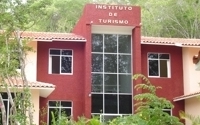
Tourism Institute
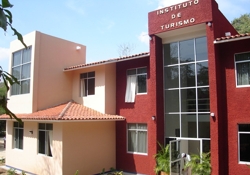
The Tourism Institute of UMAR was created in 2006 to promote research and to motivate reflection in the field of tourism, with the goal of raising consciousness that with help in making decisions that will contribute to the development of the coastal region, the state of Oaxaca and of the country in general. We contend that only by studying reality can we change it for the benefit of society.
General Goals
Planning, organizing, directing and following through on research in the field of tourism that contributes to the development of the coastal region, the state of Oaxaca and of the country in general.
Objectives:
- Carry out research projects about tourism topics.
- Study natural and cultural resources that make up the regional patrimony and can create touristic attractions.
- Identify the important current and future challenges facing research and information of the tourism sector.
- Produce, compile and evaluate statistics, facts and information relevant to tourism.
- Link research activities with research needs of the following sectors: industry, public administration and the local communities.
- Promote interchange of knowledge, experience and methodology used by researchers.
- Circulate knowledge about tourism activity and new trends in tourism, through the best means possible.
- Help in the training of human resources through the development and results of the research.
Relevant Activities
- Research about the touristic resources of the region and of the state of Oaxaca.
- Quality studies in tourism services.
- Formation of a tourism data base.
- Studies about cruise ship activity.
- Studies about tourism and combating poverty.
- Multidisciplinarian analyis of tourism.
- Seminary on tourism research.
- Organization of academic conferences and informative lectures for the general public.
International Studies Institute
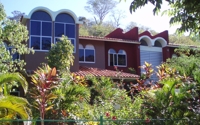
International Studies Institute, as a specialized area of academic and field research, dedicates itself principally to the understanding of phenomena, processes, theories, and international relations to thus actively contribute to better understanding and the creation of a multidisciplinary knowledge base for International Relations.
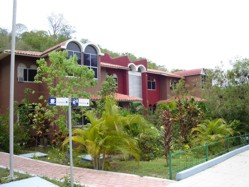
International Relations has been considered as an ecumenical-social phenomenon, that finds its deepest roots in the history of diplomacy rather than with theories of contemporary thought. As such the Institute is in a constant search for knowledge of International Relations as an inter- and multidisciplinary academic endeavour which describes, explains, and ultimately predicts the processes and phenomena linked with to the dynamic interrelations between actors on the international political stage. A coordinated endeavour is necessary since International Relations encompasses in its theoretical processes and in its practices diverse areas of study: political science, law, economy, the history of ideas through the ages, geography, the environment, and cybernetics, among others.
The Institute of International Relations creates and promotes the scientific investigation of unexplored themes in the distinct areas of knowledge of this subject, tying in with new developments in thought and preparing specialized reports on related topics. Its work includes such undertakings as:
- To research International Relations both within and across disciplines.
- To promote regional and international study and its ties with Mexico and the world.
- To provide specialized information.
- To undertake the study of international relations as seen from the viewpoint of Mexican reality – its problems and opportunities – with an emphasis on their social impact.
- To use techniques, methodologies, and tools that permit a better understanding of international phenomena.
- To spread knowledge of and promote the new currents of understanding generated by this discipline.
- To interpret and explain objectively the phenomena, process and problems that the field of study offers in the present day.
- To come up with alternative strategies for the solution of problems interrelated with local, national, and international matters.
Instituto de la Comunicación
El objetivo del Instituto de la Comunicación es planear y ejecutar investigaciones inter y multidisciplinarias sobre el fenómeno de la comunicación, buscando también su aplicación al desarrollo de la región Costa y de todo el estado de Oaxaca.
Desde su arranque en el 2009, el Instituto de más reciente creación de la UMAR ha integrado profesores de las áreas de Ciencias de la Comunicación y de Economía, estableciendo estrategias para poner en marcha el gran potencial de su capital humano.
Sus miembros han realizado significativas aportaciones teóricas al conocimiento de la Comunicación y la Economía, así como en áreas afines, y también se han integrado a diversos proyectos productivos, de difusión y divulgación.
Funciones
Las funciones principales del Instituto son las siguientes:
- Desarrollar proyectos de investigación en las áreas de Ciencias de la Comunicación y Economía
- Contribuir al desarrollo de la región Costa y el estado de Oaxaca, a través de la vinculación de los intereses de investigación con las necesidades de las comunidades locales, sector privado y administraciones públicas.
- Organizar eventos académicos para generar y difundir información relevante sobre las disciplinas estudiadas y áreas afines.
- Generar productos audiovisuales que interpreten y expresen la especificidad de la región Costa y el estado de Oaxaca.
- Formar recursos humanos de excelencia para llevar a cabo investigaciones en Comunicación, Economía y áreas afines.
Producción destacada
Entre el 2009 y el 2014, el Instituto ha generado, entre otros, los siguientes productos:
- Publicación de seis libros de autor único y 35 artículos o capítulos en las áreas de Economía, Comunicación, Filosofía y otras.
- Desarrollo de 11 proyectos de investigación (cuatro ya finalizados) centrados en temas y problemas del estado de Oaxaca.
- Producción de tres documentales de investigación (dos ya finalizados).
- Organización de dos ediciones del Seminario Internacional Los Nuevos Rostros de la Migración.
Instituto de Economía
Instituto de Economía
Resources Institute
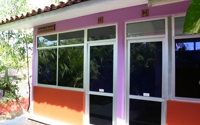
The Resources Institute carries out studies of the following natural resources: continental, coastal, oceanic and also those in the mountain ranges of Oaxaca. These studies are carried out for the purposes of creating and gathering important information that will support the preservation and rehabilitation of zones and ecosystems which aim to avoid or minimize damage to the state as well in to make an inventory of flora and fauna populations in the face of global change.
These studies include:
- Research on the history of the earth’s crust in the area to discover the geological paleontological history of the surrounding countryside as a natural resource. This research also sets out to find and describe new places that have potential to benefit the state.
- Permanent inventories of natural resources, distribution and abundance analysis. These inventories also involve time to determine the changes that happen to the towns and the way that they develop. The inventories are also kept on farming and fishing activities that exist in the region. The aim is to keep inventories of the flora and fauna of the state that, together with the results of the analysis of such resources, recommendations on sustainable farming will come about. These recommendations may also propose essential ideas for administration, like bans on farming and fishing activities during certain seasons, capture areas, and sustainable farming, among others.
- Evaluations of the potential of the Mexican maritime waters for navigation, the coast and the sea use for tourism, and the possibilities for developing alternative energy sources.
- A study of the availability and distribution of inorganic nutrients coming from coastal bodies of water. This study delves also into the incidence of the primary production of adjacent oceanographic regions whose inhabitants are aware of the chemical and biological processes related to the fertility of the coastal lagoons and to encourage an interchange with such regions.
- Identification and evaluations of the dynamic mechanisms of the coastal and oceanic waters in order to become aware of the existing relationships within the physical parameters of the ocean and the performance possibilities of deep-sea fishing grounds.
- Chemical and biological evaluations coastal and sea natural recourses as support for knowledge of the same and the generation of new information that will benefit the population.
- Following nutrient flows en the coastal floor to determine the state of such resource in order to determine the state of such resource for natural and anthropogenic (human based) events.
More Relevant Activities
- Generation and maintenance of the following collections: Phyto Zooplankton and Zooplankton, Macrophytes and epiphyte microalgaes associated with LIPB Icthyoplankton corals, embryos, and fish. Botanical Area: Herbarium y Xilotec area de zoology, herpetic fauna, birds, mammals, aquatic invertebrates, terrestrial invertebrates, and marine invertebrates.
- There are currently 26 research projects in progress which are financed by CONACYT, PROMEP, CONAPESCA, and UMAR. There are also collaborations with institutions like CICESE UNAM, CICESE, UNISTMO and UABC.
- Publication of various articles en magazines.
Ecology Institute
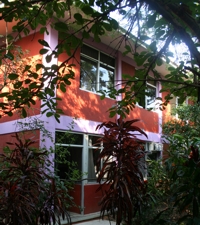
Since its inception, the Institute of Ecology has been an entity where to study the status and dynamics of coastal ecosystems to learn about its composition and biotic organization and the destructive effects that are occurring as a consequence of social and economic development in the coast of Oaxaca. With the result to propose solutions that shall prevent destruction and will promote a collective sense of conservation and environmental protection. In its first phase, the Institute set out to identify the major environmental problems being generated along the coast, they worked on the environmental analysis in the coastal zone, on both marine and continental environments.
It currently contains essential infrastructure developments that comply in accordance with their program activities such as:
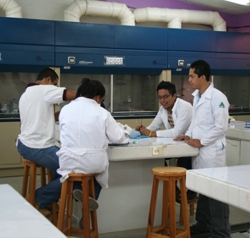
Laboratories
- Laboratory of Geographic Information & Sensors (GIS) and Remote Sensing, in the Puerto Ángel campus and the Puerto Escondido campus
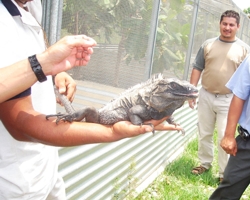
CECOREI (Center for Conservation and Iguana Breeding)
- Area: 8 hectares, two sets of 5 cages, shade provided by vegetation and plants and a pond.
- Activities: Resettlement of the species
- Species: Black Iguana (Ctenosaura Pectinata), Green Iguana (Iguana Iguana)
- Results: Hatchlings in captivity, of which species have been released for the resettlement of black iguanas and green iguanas
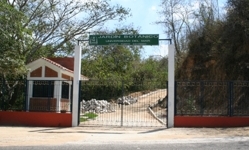
Botanical Gardens
- Bajos de Chila: 17 Hectares
- Chepilme: 7.9 Hectares
- Areas of protection: firewall gap, soil retention, and nursery for native species.
- Units conserving lowland jungles
Objectives
- State of socio-environmental resources
- Improvement in the Use of Resources
- Environmental Impacts
- Corrective Action and Mitigation
- Social Stewardship
Most relevant activities
- Currently developing 12 research projects
- Diverse efforts of help are realized in promoting development
- Several articles have been published in journals & arbitration magazines and contributions to chapters in text books have also been made
Industries Institute
Industries Institute is located in Puerto Ángel campus.
Social Sciences and Humanities Institute
El Instituto de Ciencias Sociales y Humanidades de la Universidad del Mar se encuentra en el campus Puerto Ángel, y centra su trabajo en las áreas relacionadas con las ciencias marítimas (rutas comerciales, puertos, comercio, flota mercante, etc.), administrativas (administraciín portuaria, recursos humanos, etc.) y legislaciín (naval, marítima, tributaria, etc.).
Las principales líneas de investigaciín del instituto están relacionadas con:
- Economía y globalizaciín
- Derecho del mar
- Gestiín de API (Administraciín Portuaria Integral)
- Transporte de mercancías por la vía marítima
- Administraciín de recursos humanos
Los proyectos de investigaciín desarrollados por el Instituto de Ciencias Sociales y Humanidades son:
- El estado del arte en el campo marítimo-portuario (desde una perspectiva mexicana): ¿hay cambios de paradigmas? (1990-2012). Director. Dr. Juan Narciso Ojeda Cárdenas.
- Las políticas portuarias en México en el contexto latinoamericano: entre los modelos, las políticas y los nuevos escenarios (1988/2014). Director. Dr. Juan Narciso Ojeda Cárdenas.
- Los egresados recientes de la Universidad del Mar y el mercado de trabajo en un mundo globalizado: diagnístico y propuesta. Directora. Mtra. María Verenice Mondragín Alarcín.
- El Estado de Oaxaca bajo una perspectiva marítima. Director. M.C.I. Fausto Roberto Camargo Ochoa
Los principales artículos publicados por investigadores del Instituto de Ciencias Sociales y Humanidades son:
- Los puertos mexicanos en el siglo XXI: situación y debate (1991-2012). Juan N. Ojeda-Cárdenas. Ciencia y Mar.
- Una metodología para estudiar a los puertosquegananypierdenenlospaísessemiperiféricos: el caso de México en un mundo globalizado.Juan N. Ojeda-Cárdenas. Revista Cátedra.
- Puertos de México en un mundo globalizado (entre la exclusión y el crecimiento). Juan N. Ojeda-Cárdenas. Editorial Académica Española.
- Los Puertos de España y México. Fernando González-Laxe y Juan N. Ojeda-Cárdenas.Net Biblo.
- Países líderes y regionalismo en la Cuenca del Pacífico. M. Verenice Mondragín. Ciencia y Mar.
- El Acuerdo Comercial Bilateral China-Estados Unidos y los Derechos Humanos. M. Verenice Mondragín. Ciencia y Mar.
- El papel del conocimiento en las organizaciones: un enfoque sobre las personas. M. Verenice Mondragín. Ciencia y Mar.
- ¿Qué es la Globalizaciín? M. Verenice Mondragín. Boletín Mare Liberum.
- El Canal de Panamá: puente marítimo estratégico en las Américas, Carlos Argüelles en: Los Puertos de España y México. Fernando González-Laxe y Juan N. Ojeda-Cárdenas.Net Biblo.
Genetics Institute
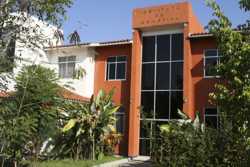
Genetics Institute is located in Puerto Escondido campus.
En el 2010 se crea el Instituto de Genética cuyo objetivo general es hacer investigación y formar investigadores de alto nivel en el campo de la Genética, Genómica, Proteómica y Biotecnología, en el marco de proyectos orientados hacia la innovación y el desarrollo tecnológico, bajo un escenario científico de alto nivel regional, nacional e internacional en aspectos de enseñanza, investigación y vinculación para la formación de actores innovadores competentes en su orientación, capaces de resolver y enfrentar las demandas del entorno.
Adicionalmente, se pretende consolidar el trabajo de investigación en red, conjuntando a los investigadores de la Universidad del Mar y creando sinergias entre las Unidades Académicas que integran la Red de Biotecnología, Genética, Genómica y Proteómica.
Misión
Somos un Instituto de nueva creación enfocado a fomentar, desarrollar y producir investigación de carácter multi e interdisciplinario, vinculando el postgrado y desarrollando actividades de docencia, extensión, difusión y vinculación en el campo agrícola, acuícola, forestal, pecuario y sanidad. Se pretende promover la excelencia académica a través de su personal altamente calificado y tecnologías apropiadas orientadas al interés de la sociedad, comunidad académica y científica a nivel nacional e internacional.
Visión
El Instituto de Genética de la Universidad del Mar pretende ser un centro de Investigación líder en el área de la genética, genómica y proteómica a nivel nacional por medio de la generación y aplicación de nuevos conocimientos, asesoramiento y apoyo científico-tecnológico, así como, en el desarrollo de estrategias innovadoras para el estado, sociedad y sector productivo. Además, fomentará la conformación de redes y grupos estratégicos de trabajo a nivel nacional e internacional para integrarse a la dinámica de la comunidad científica.
Se presenta una proyección de nuevas líneas de investigación:
- Genética Animal
- Genética Vegetal
- Genética de Microorganismos
- Genómica
- Proteómica
- Biotecnología Agrícola
- Biotecnología Vegetal
- Biotecnología Acuícola
- Sanidad Acuícola
- Sanidad Agrícola
- Sanidad Pecuaria
- Conservación de Germoplasma
Academic Bodies
The University of the Sea, Puerto Escondido campus, has 7 academic bodies: Informatics; Agricultural Sciences; Ecology; Geosciences; Earth Sciences; Forestry Science, and; Biotic Communities.
Informatics
The Academic Body of Informatics was established on August 28, 2005. Currently the department has five members of whom 100% are postgraduates, and 80% have a Desired Profile. There are also 6 employees working within the department. According to Promep-SEP, the Academic Body of Information Technology is “in development”.
Current Projects
-
PSEUMAR Alumni Monitoring Program Web Portal
Director: Mariana Guzmán Ruiz, M. Sc.
Collaborators: Cirino González Cortés;, José Francisco Delgado Orta, M. Sc. -
Academic Body of Ecology Web Portal
Director: Mariana Guzmán Ruiz, M. Sc.
éFrancisco Delgado Orta, M. Sc. -
Development of specialized software for artificial intelligence applications – Stage I
Director: Jorge Ochoa Somuano, M. Sc.
-
Design and Implementation of an automated solar electric system for the San Pedro Mixtepec Botanical Garden booth
Director: Christian Ayala Esquivel, M. Sc.
Collaborators: Jorge Ochoa Somuano, M. Sc.
Coordinator
- Mariana Guzmán Ruiz, M.Sc.
Members
- Isidro Moctezuma Cantorán, M.Sc.
- Jorge Ochoa Somuano, M.Sc.
- Manuel Alejandro Valdés Marrero, M.Sc.
- Christian Ayala Esquivel, M.Sc.
- Mariana Guzmán Ruiz, M.Sc.
Collaborators
- Juan Carlos García Villeda, M.Sc.
- Saúl Gómez Carreto, Eng.
- Honorato Cerón González, M.Sc.
- Benjamín Gómez Ruíz, B.A.
- Remedios Fabián Velasco, M.Sc.
- Omar Antonio Cruz Maldonado, M.Sc.
Agricultural Sciences
In the academic body for agricultural sciences, the talent of three young researchers has been combined. They belong to the national system of researchers as candidates.
General Objective
To study, from a systematic point of view, problematic individuals, populations and or ecosystems associated with domestic animals and plants, the soil, and resources related to the former.
Specific Objectives
- Evaluate, improve or propose conditions of breeding, sanitation, production, reproduction, transformation and commercialization of non-ruminant species of animals, as well as develop techniques and methods which support intensive breeding of domestic species that, due to lack of tradition or diffusion, haven’t been adequately taken advantage of in the region. Use of species of non-ruminant forest fauna susceptible to sustainable exploitation, ending in production.
- Research factors that affect the reproductive parameters of ruminants. Creation of knowledge referring to the reproductive physiology of domestic ruminants and forest fauna, study factors that limit their reproduction, reproductive physiology of endemic forest ruminants of tropical and temperate regions in the Mexican republic. Propose the development of programs of assisted reproduction for ruminant endangered species.
- Know the characteristics of soil and hydrological resources, as well as woodland and tropical forests. Estimate their potential for sustainable use and propose adequate techniques for their rational exploitation.
Current projects
- “Determination of the sanitary state of the native backyard turkey (Meleagris gallopavo L.) in the coastal region of Oaxaca”. 2008.
- “Influence of breastfeeding and dopaninérgico and opioid systems on the reestablishment of post birth activity in pelibuey”. To be completed in September 2010.
Coordinator
- Dr. Marco Antonio Camacho Escobar
Members
- Dr. Edgar Ivan Sánchez Bernal
- Dr. Jaime Arroyo Ledezma
- Dr. Marco Antonio Camacho Escobar
Ecology
The Department of Ecology (UMAR-CA-019) was incorporated on May 7th, 2007 and obtained the level of "information" on June 24, 2008. It consists of eight members, including four doctorate professors, three science teachers and one with a specialization. Four members are members of the SNI and two of them have PROMEP Desirable Profiles.
Members cultivate three Lines of Generation and Application of Knowledge: 1) Biodiversity, 2) Population dynamics and biological communities, and 3) Environmental education.
The short term goal of the Academic Body is to form a group of multidisciplinary and inter-institutional researchers, which would in turn strengthen its interdisciplinary work and then in the long term establish a high quality research group working with other national and international institutions.
Current Projects
- Diagnosis of generated waste at the UMAR, Campus Puerto Escondido and a proposal for its management.
- Infestation and specificity of espinturnicide ectoparasites (Acari: Spinturnicidae) on bats in the municipality of San Pedro Mixtepec, Juquila, Oaxaca.
- Characterization of vegetation and wildlife in the watershed of the Rio Yerba Santa, municipality of San Pedro Mixtepec, Oaxaca.
- Comparison of macromycete diversity in different vegetation sites in the coastal region of the state of Oaxaca.
- Small mammals at two sites with different degrees of disturbance in Carrizal de Galeana, Putla District, Oaxaca.
Coordinator
- Carlos García Estrada, Ph.D.
Members
- José Cruz Bojorges Baños, Ph.D.
- Helisama Colín Martínez, M.Sc.
- Edith Galván Ochoa, Spec. in Geom.
- Rosario García Alavez, M.Sc.
- Carlos García Estrada, Ph.D.
- Noé Ruiz García, Ph.D.
- Carlos Alberto Ruiz Jiménez, M.Sc.
- José Luis Villarruel Ordaz, Ph.D.
Collaborators
- Undergraduate and graduate students conducting social service and theses.
Geosciences
The state of Oaxaca has a wide diversity of geology, which carries the fossil record of the biota that inhabited the territory of the state, as well as various mineral resources, water and energy.
The information generated from research in the field of geosciences will contribute to a better knowledge of the organisms that inhabited the state in different geological ages and the geological history of the state.
The Academic Body of Geosciences was established in July 2007 under Code PROMEP UMAR-CA-18. Today it is one of the three UMAR departments classified as “In Consolidation” by PROMEP.
General Objective
The study of fossil fauna of the state of Oaxaca and its sedimentary environment.
Specific Objective
- Characterization and analysis of the structure of animal communities through different geological periods and eras represented in Oaxaca and the country.
- The characterization of the fossil-bearing sedimentary bodies in Oaxaca and characterization of pedological coverage of Oaxaca and Mexico.
Current projects
- CONACYT Basic Science Project 2008 No. 101626 "Ecomorphological characterization and biogeographic patterns of vertebrates of Rancholabreano in Mixteca Alta, Oaxaca".
- National Geographic Society / Waitt Grant Program Project, "Life at World's End: In Search of Fossils in Southern Mexico from the Warmest Interval of the Cenozoic".
- Also collaborating in the CONACYT Basic Science Project 2009 No. 130712 "The record of terrestrial ungulates in the Pleistocene of Hidalgo, Puebla and Tlaxcala, central Mexico: An interpretation of dietary habits and characterization of land paleo-communities.
Coordinator
- Eduardo Jiménez Hidalgo, Ph.D.
Members
- Rosalía Guerrero Arenas, M.Sc.
- Héctor Santiago Romero, Ph.D.
- Eduardo Jiménez Hidalgo, Ph.D.
Collaborators
- Researchers of the Department of Paleontology, Institute of Geology, UNAM, researchers of the Museum of Paleontology of the Universidad Autónoma del Estado de Hidalgo.
- Undergraduate students of Biology at the UMAR and the University of Guadalajara.
Earth sciences
The Earth Sciences Academic Body was created February 01, 2002. The Department currently has six projects and several academic articles of interest.
General Purpose
The Academic Body was created to increase professional interaction among professors to study problems that arise within their own lines of research and at the same time raise the professional quality of the students through their participation in research projects.
Specific Objectives
- Establish multiple use of natural resources found in the coastal region, promote the productive potential of range lands through the adaptation of foraging species, supported by the analysis of soil fertility and resistance to pests and plant diseases; detection and propagation “in vitro” of useful species in the grassland to be used rationally.
- To study the biochemical aspects of plant and animal species in some processes of their physiology; to study the anatomical aspects of plant and animal species of economic or social interest.
- The Department is based on the preparation of professionals who will influence, in part, in solving the problems of the region, state and nation, with development and training in management, conservation and sustainable use of conventional and non- conventional species that are not currently priority topics.
Current projects
- Equipment improvement in livestock produce technology (agro-industrial processes)
- Control of internal parasites in iguanas in captivity
- Use of green forage of hydroponic maize (Zea mays) in the feed of juvenile sheep
- Establishment of Protein Banks of Forage Grasses and Legumes
- Effect of gastrointestinal parasites in ruminal activity of cattle in the tropics
Coordinator
- Roberto López Pozos, Candidate to Ph.D.
Members
- Arcos García José Luis, Ph.D.
- Gamboa Alvarado José Guadalupe, Ph.D.
- López Pozos Roberto, Candidate to Ph.D.
Collaborators
-
Contributing Professors
- Bernabé Hernández Abelardo, M.Sc.
- Cruz Vázquez Julieta Karina, M.Sc.
- Flores Morales Eliud, M.Sc.
- López Garrido Serafín Jacobo, Ph.D.
- Calderón Oropeza Mónica Alicia, M.Sc.
- León Vélez Hernández, M.Sc.
- Machorro Samano Sergio, Eng.
- Ruvalcaba Gómez Gabriel, Eng.
- Félix Ortiz María Reyna, Biol.
- Martínez Salazar Marycruz, Biol.
- Núñez Ordaz Jesús
- Rojas Almaraz Daniela
- Peña Sánchez Jair Oswaldo
Masters Students Collaborators
Undergraduate Student Collaborators
Forestry Science
The Academic Body of Forestry Sciences has the objective of basic and applied research in the areas of cultivation and management of forest ecosystems through conservation, protection and sustainable use for socio-economic development of forest communities.
The department was created in 2006, identified under code UMAR-C17, and currently consists of 9 professors who, through their various lines of research, support basic and applied research areas referred to as Lines of Generation and Application of Knowledge (LGAC’s).
Research Areas
- Improvement of genetic resources in forestry and forest management.
- Biometrics applied to the forest industry for the socioeconomic development of forest communities.
General Objective
Promote and improve research, diffusion and training in forest sciences addressing Lines of Generation and Application of Knowledge in order to support the Educational Program (PE) of forestry and related sciences.
Specific Objectives
- Conduct research that supports LGAC's in order to enhance the PE of forestry engineering.
- Organize and coordinate events for networking and diffusion of the science between academic actors and the productive sector.
- Provide and receive refresher courses to enhance knowledge in the academic environment as well as encourage feedback between the PE’s of different institutions
Current Projects
- Composition and distribution of populations of Dioon holmgrenii in the Sierra Sur of Oaxaca region.
- Distribution and structure of Zamia sp. and Ceratozamia sp. (Cycadaceae) in the coastal region of Oaxaca.
- Timber growth system and yield and financial evaluation of a plantation of two tropical tree species in the Oaxacan coast.
- Analysis of land use change and forest cover in the San Pedro River Basin.
Coordinador
- Gricelda Valera Venegas, M.Sc.
Members and research areas
- Rolando Galán Larrea, M.Sc.
- Growth of tropical trees
- Forestry and forest management - Verónica Ortega Baranda, M.Sc.
- Ecology and Forest Ecosystems
- Forest fires
- Agroforestry - Erik Pablo Carrillo, Ph.D.
- Genetic improvement
- Seed production - Juana Laura Rivera Nava, Ph.D.
- Population biology, ecology, forestry
- Histochemistry, Anatomy and Wood Technology - Anastasio Rodríguez León, B.A.
- Environmental Economics and Natural Resources - Francisco Valdez Martínez, B. in Territorial Planning
- Territorial Planning
- Topography
- Cartography - Edgar Valencia Rojas, M.Sc.
- Gricelda Valero Venegas, M.Sc.
- Soil use and forest cover
- Surface hydrology - Mario Valerio Velasco García, M.Sc.
- Seeds and production of forest plants
- Evaluation of natural populations
- Forest Genetic improvement
Biotic Communities
Biotic communities are defined as the set of all interdependent living beings in a given space and should be studied with an interdisciplinary approach. With this in consideration, the faculty seeks to generate the development of interdisciplinary research projects on all living beings within a given area, using Lines of Generation and Application of Knowledge (LGAC’s) developed by staff members.
Lines of Generation and Application of Knowledge (LGAC’s)
- Study of Biotic Communities
Description
- Studies of distribution, diversity, interactions, dynamics and pathology of biotic communities in the coastal region and southern mountains of Oaxaca.
- Use of molecular tools for the assessment of the distribution, diversity, interactions, dynamics and pathology of biotic communities in the coastal region and southern mountains of Oaxaca.
Objectives
- Design a conceptual organization scheme of the department which permits interdisciplinary academic work and a proper and efficient use of the available infrastructure.
- Proposing and structuring research projects involving actively and in a coordinated manner, disciplines and approaches of the researchers who make up the department.
- Promote the interdisciplinary work of high academic standards of department staff through the discussion of theory and common basic concepts.
- Define lines of research aimed at finding strategies to evaluate the structure, function and interrelationships that occur in natural systems of the coast of Oaxaca.
- Promote the improvement of academic staff of the department, developing research projects to facilitate their incorporation into doctoral programs.
- Make efforts to obtain extra financial support, in order to render self-financed activities and work done in the department.
Coordinator
- Jesús García Grajales, M.Sc. (PROMEP Desirable Profile 2008-2011)
Members
- Alejandra Buenrostro Silva, M.Sc. (PROMEP Desirable Profile 2010-2013)
- Mónica Marcela Galicia Jiménez, M.Sc. (PROMEP Desirable Profile 2010-2013)
- Guillermo Sánchez de la Vega, M.Sc.
The Puerto Angel campus of the Universidad del Mar has nine academic bodies: Coastal Aquaculture; Marine Biology; Environmental Biotechnology; Microalgal and Aquacultural Biotechnology; Maritime Studies; Environmental Engineering; Management and Dynamics of Coastal Zones; Environmental Chemistry, and; Coastal Resources.
Coastal Aquaculture
Specific Objectives
- Develop and refine cultivation technologies for fish and crustaceans for the purpose of fostering this activity on the Oaxacan coast.
- Study and research techniques covering all areas from induction to maturation, spawning and larval care under controlled conditions for crustaceans and fishes of regional interest.
- Optimize diets for prawns, tilapia, and marine fishes during their different stages of development.
- Apply technologies in order to obtain nonconventional ingredients (agricultural products and byproducts of the region) for the preparation of balanced meals.
- Apply post-harvest technology to add value to food products arising from aquaculture.
- Develop technology for the production of populations of single sex fishes under organic production standards.
Members
- Cuevas Pérez Conrado Leonardo
- Delgado Vidal Fátima Karina
- Madrid González Jesús Guillermo
- Martínez Vega José Arturo
- Pintos Terán Pablo Antonio
- Santiago Morales Ivonne Sandra
- Tenorio Colín Guadalupe
- Torres Hernández Pablo
Marine Biology
Specific Objectives
- Increase the academic level of the membership of the Academic Body for Marine Biology.
- Carry out regional scientific research under high-level quality standards.
- Foment excellence in human resources.
Members
- Barrientos Luján Norma Arcelia
- Bastida Zavala José Rolando
- Benitez Villalobos Francisco
- García Madrigal María Del Socorro
- Leyte Morales Gerardo Esteban
- López Pérez Ramón Andrés
- López Serrano Antonio
- Meraz Hernando Juan Francisco
- Montoya Márquez José Alberto
- Torres Huerta Ana Maria
Environmental Biotechnology
Specific Objectives
- Increase the academic level of the membership of this Academic Body from its current status of three persons with studies completed at the doctoral level and six at the post-graduate level. By the end of 2006 it is forecast that the academic level of the Body will increase to 55% with doctoral studies and 89% with master’s studies. Furthermore, at this same time, one professor will be initiating his doctoral thesis during his sabbatical leave.
- Increase the scientific collaboration and productivity between members of the Academic Body.
- Push for greater collaboration with other Academic Bodies.
Members
- Aizpuru Aitor
- Camacho Sanchez Minerva E. Isis
- Estrada Vazquez Carlos
- Huante Gonzalez Yolanda
- Martínez Lievana Concepción
- Ramirez Fuentes Eustacio
- Trujillo Tapia María Nieves
Microalgal and Aquacultural Biotechnology
Specific Objectives
- Implement techniques for the maintenance and preservation of micro organisms in collections.
- Identify microalgae found in the region with potential for aquacultural adoptation.
- Key according to biological, biochemical, morphological and toxicological traits 30% of the microalgae in the collections.
- Implement appropriate routines for the maintenance of large-scale cultures under controlled laboratory and semi-controlled external conditions.
- Obtain metabolic bioactives through microalgal and other invertebrate cultures.
- Augment, restructure and/or create a Biotechnology Laboratory for microalgae.
- Adapt and innovate systems and cultivation techniques for bivalves.
- Develop management procedures for organisms native to the laboratory.
- Optimize methodologies for the extensive cultivation of bivalves through the stages of breeding, intermediate cultivation, weight gain for market readiness, and harvest.
- Test collectors and identify optimal capture periods for native bivalve species of regional interest.
- Identify and assess limits to the dynamic processes that affect bivalve cultivation in La Boquilla, Puerto Ángel.
Members
- Cuevas Aguirre Ángel
- Sánchez Estudillo Leticia
- Serrano Guzmán Saúl Jaime
- Shain Mercado Amado Jorge
- Torres Ariño Alejandra
Maritime Studies
Specific Objectives
- Problem solving related to maritime traffic and ports
- Juridical studies related to maritime matters
- Social and regional studies
Members
- Cervantes Centeno Emilio
- Flores Ruiz Ruperto
- Mondragón Alarcón María Verenice
- Mondragon Velazquez Sixto
- Palacios Díaz Fabián
- Rodas Sánchez Gildardo
- Romero Reyes Alejandro
Environmental Engineering
Specific Objectives
- Raise the level of the academic personnel so that 80% reach the minimum profile for PROMEP and 60% of those who have completed doctoral studies incorporate themselves to the National Research Registry (SNI).
- Foment the development of the LGAC through increased scientific and academic productivity.
- Achieve the goal of 100% participation by the members of the Academic Body in teacher training courses by 2006.
- Succeed in having the Academic Body of Environmental Chemistry registered as an Academic Body in formation with PROMEP for the period 2004-2005, and the Academic Bodies of Separation Processes and Environmental Engineering registered as Academic Bodies with PROMEP for the period 2005-2006.
Members
- Enriquez Rosado Maria del Rosario
- Fontana Llerandi Gianpaolo
- Klimek Gamas Ricardo Adolfo
- Peralta Reyes Ever
- Regalado Méndez Alejandro
- Zúñiga Ramírez Martín
Management and Dynamics in Coastal Zones
Specific Objectives
- Contribute to an improvement in the oceanographic knowledge of the bodies of coastal and oceanic waters, especially those of the region.
- Participate in the design, implementation and diagnosis of sustainable development policies and administration of coastal resources through scientific assessment and technique.
- Support the education of Oceanographers, Marine Biologists, and Master’s in Science in the Universidad del Mar.
Members
- Ahumada Sempoal Miguel Angel
- Chapa Balcorta Cecilia
- Hernández Hernández Ricardo
- Hernandez Santiago Cuitlahuac
- Martínez López Roberto Esteban
- Reyes Hernández Austreberto
Environmental Chemistry
Specific Objectives
- Develop and strengthen the Academic Body to enable it to have an impact in transforming the region.
- Count upon the maximum academic capability for the majority of its members, as well as wide experience in teaching and in the training of human resources.
- Generate and apply knowledge innovatively and in an independent manner.
- Have a high institutional commitment.
- Maintain relations with other Academic Bodies or research groups at a high level, through participation in academic interchange networks.
Members
- Amador Hernández Judith
- Anaya German Enrique
- Gutierrez Ortiz María del Rocio
- Hernández Carlos Beatriz
- Ramirez Mares Jose Marco Vinicio
- Velazquez Manzanares Miguel
Coastal Resources
Specific Objectives
- Maximize capability of the PTC members of the Academic Body
- Formation of human resources
Members
- Alejo Plata María Del Carmen
- Cardeña López Rolando
- Cerdenares Ladrón de Guevara Genoveva
- Cervantes Hernández Pedro
- González Medina Gabriela
- Herrera Galindo Jorge Eduardo
- Karam Martínez Samantha Gabriela
- Ramos Carrillo Samuel
The Huatulco campus of the Universidad del Mar has four Academic Bodies: in the Institue of International Studies are found International and Regional Studies, and; Communication Sciences. In the Tourism Institute are found Tourism and Sustainable Development, and; Territorial Planning in Tourism.
International and Regional Studies
Specific Objectives
- Consolidate the Academic Body with the end of strengthening the curriculum for International Relations in the Universidad del Mar.
Strategy: Take full advantage of existing programs in order that the professors who are members of the Academic Body may obtain the necessary academic levels. Encourage activity by the Academic Body so that members obtain the desired profile for PROMEP.
Goal: That two professors with undergraduate degrees acquire Master’s
Action taken: Request that the professors who have not reached their Master’s to use the available resources and programs in order to achieve this academic status.
Result: two professors have obtained their Master’s. - Increment the academic production of the Academic Body
Strategy: Organize an internal seminar on a monthly basis, and one with external participants on a yearly basis
Goal: Publish a collective compilation and three arbitrated articles
Action: Research, writing and editing of the manuscripts
Result: one book and three arbitrated articles published
Current Projects
- Diversification of international commerce in Mexico and Russia: the case of the ports of Salina Cruz and Najodka.
Publications
- “Instrumentación del seguro marítimo de mercancías en México”, Ciencia y Mar.
- Arguelles Arredondo, Carlos Gabriel. “Le Canada, les Ameriques et la concurrente de blocs regionaux”. America’s Worlds and The World’s Americas, Les mondes des Ameriques et les Ameriques du monde.
- Identidad y desarrollo: Una mirada a La Jabalina, Oaxaca.
Coordinator
- Mtro. David Medrado Goméz.
Members
- Mtro. Carlos Gabriel Arguelles Arredondo
- Dr. Maximiliano Gracia Hernández
- Lic. Teresa Elena Hayna de Lozanne
- Dra. Valentina Prudnikov Romeiko
Communication Sciences
Specific Objectives
- Design common research projects following the guidelines of the LGAC’s (guidelines for the generation and application of knowledge) of the Academic Body.
Strategy: Register research projects.
Goal: That the Academic Body have a research project registered in 2006.
Action: Carry out seminars to familiarize members with the LGAC’s.
Results: That all members of the Academic Body become familiar with the LGAC’s. - Publicize results obtained from academic undertakings and/or research.
Strategy: Identify the appropriate channels for publicizing academic undertaking and/or research.
Goal: That each member of the Academic Body participate in a publication in 2006.
Action: To look for arbitrated journals in which one may publish. Participate, as presenters, in congresses and seminars.
Results: Having a directory of refereed journals and a calendar of conferences in which they can participate as speakers. - Develop a work proposal for the certification process for students in accordance to the needs of the EP of Communication Sciences which will contribute to the overall efficiency.
Strategy: Identify needs of the EP and generate coherent and viable proposals.
Goal: Submit a thesis proposal seminar and certification to the leadership of Communication Sciences in September 2006.
Action: Conduct workshops to identify needs, develop and evaluate proposals.
Outcome: To have the project of the certification process for the PE of CC completed by September of 2006. - Establish collaborative networks with national Academic Bodies.
Strategy: Identify national Academic Bodies.
Goal: Establish contact with two Academic Bodies at a national level.
Action: Look for information on institutions that have pertinent Academic Bodies.
Result: Find two institutions that have pertinent Academic Bodies. - Generate a synergy of teamwork among the members of the Academic Body.
Strategy: Organize work meetings to develop and evaluate the objectives outlined in the work program.
Goal: Hold a meeting once a month.
Action: Draw up a calendar of meetings for 2006.
Result: Ten work group meetings held in 2006.
Coordinator
- Lic. Dolores Eugenia Ayala Vázquez
Members
- Mtra. Mónica Castillo Nieto
- Mtra. Sonia López Hernández
- Mtro. Eizo Luís Rodríguez Vidal
Tourism and Sustainable Development
Current Projects
- Analysis of the quality of service in hotels in the tourist resort of Bahías de Huatulco, Oaxaca; one year, 65%. Berenice Castillejos. Measurement of the technical efficiency of small and medium hotels in Bahías de Huatulco, Oaxaca, Mexico, as a factor of competitivity. CUP: 2IT0801. Start date: 25 Feb 2008, degree of progress towards achievement 10%.
- Measurement of the technical efficiency of small and medium hotels in Bahías de Huatulco, Oaxaca, Mexico, as a factor of competitivity. CUP: 2IT0801. Collaborator: Mtra. Sandra Luz Méndez Saucedo. Start date: 25 Feb 2008, degree of progress towards achievement 10%.
- Elaboration of a directory of restaurants and fiestas, a registry of the historical founding, a registry of tourism resources, and a registry of tourism infrastructure in the villages of Mazunte, Ventanilla, San Agustinillo, and Agua Blanca.
Publications
- Piñon, Mauricio et.al. “Una pizca de Huatulco”, año 2008, editorial UMAR.
- La protección ambiental y el ecoturismo como instrumentos para la defensa de recursos naturales de comunidades campesinas. El caso de Huatulco, Oaxaca”, en Desertores. Número 3:25-26, abril de 2007.
- “El turismo como instrumento para el control territorial”. Ponencia Magistral incluida en las memorias [CD] del 4° Foro de Investigación y Reflexión en torno al Turismo. Universidad Autónoma del Estado de México, Unidad Académica Texcoco. 27 y 28 de septiembre de 2007.
- Paper: Diagnosis of the quality system in small and medium hotels of Huatulco, Mexico. Octubre 2007. WTO.EKM papers.
- UNWTO Ulysses Conference: Governance for Excellence in Tourism Destinations
Coordinator
- M. en C. Sofia L. Rodiles Hernández
Members
- Pascal Barradas Salas
- Berenice Castillejos López
- Guillermo Chávez Muñoz
- María José Fernández Aldecua
- Paulino Jiménez Baños
- Víctor Manuel López Guevara
- Sandra Luz Méndez Saucedo
- Patricia Noriega Gómez
- Oscar David Olivo Hernández
- Mauricio Piñón Vargas
- Roberto Eduardo Preciado Ibarra
- Jorge Alfonso Ramírez Luna
- Perla Rodríguez Justo
- María Esther Rodríguez Lázaro
Collaborators
- Academic body on tourism of the Universidad Autónoma del Ciudad Juárez.
- Academic Body Studies on the Tourism Phenomena of the University Center of the Universidad Autónoma del Estado de México en Texcoco.
Territorial Planning in Tourism
Current Projects
- Diagnosis of the natural resources of the Bay and Micro-Watershed of Río Cacaluta, Municipality of Santa María Huatulco, Oaxaca. Reference: SEMARNAT-CONACYT 2002-01-C01-00605.
- Design and construction of a system of electronic monitoring for determining the post-harvest physiological behaviour of fruit and orchards.
- Ethics, ecology and tourism: a neopragmatist approximation.
- Empirical study on moral values in the tourism sector of the Bahías de Huatulco. . Geographic information system tor the conservation of the Laud tortoise (Dermochelys coriacea) on the coast of the State of Oaxaca. Funding Organization: Fondo Oaxaqueño para la Conservación de la Naturaleza (Oaxacan Foundation for Nature Conservation).
- The general theory of systems as a methodology for the analysis of International relations.
Publications
- Discusiones acerca del término sustentabilidad (presentation)
- Integración en América del Norte: ¿Hacia la construcción de un perímetro de seguridad?”.
- Place: Universidad Michoacana de San Nicolás de Hidalgo. Instituto de Investigaciones Económicas y Empresariales. Seminario Internacional Relaciones México-Estados Unidos y México-APEC. (presentation).
- Filmmakers: Tenorio-Salgado, J. M.; Kuri-Reyes, M. A.; Domínguez-Licona, J. M.; Hernández-Santiago, C. (2008). Video: Diagnóstico de los Recursos Naturales de la Bahía y Micro-cuenca del Río Cacaluta. Proyecto: “Diagnóstico de los Recursos Naturales de la Bahía y Micro cuenca del Río Cacaluta, Municipio de Santa María Huatulco, Oaxaca”, financiado por SEMARNAT-CONACYT, clave SEMARNAT 2002-C01-0605. Fecha: 14 de septiembre de 2007. Nota: (En edición por la Universidad del Mar).
- Hernández-Santiago, C.; Domínguez-Licona, J.M.; Tenorio-Salgado, M. (2008) “Atlas digital de la Micro-cuenca del Río Cacaluta, Municipio de Santa María Huatulco”. En la obra: Diagnóstico de los recursos naturales de la Bahía y Micro-cuenca del Río Cacaluta, Municipio de Santa María Huatulco, Oaxaca. Universidad del Mar, CONACyT-SEMARNAT. Puerto Ángel, Pochutla, Oaxaca. (En edición por la Universidad del Mar).
- Domínguez-Licona, J.M. (2008) Editor y Comp., Diagnóstico de los Recursos Naturales de la Bahía y Micro cuenca del Río Cacaluta, Municipio de Santa María Huatulco, Oaxaca, Universidad del Mar, México, p. 380 (En edición por la Universidad del Mar). Clave: SEMARNAT-CONACYT 2002-01-C01-00605.
- Filgueiras, José María, “Reflexiones kuhnianas sobre la «cientificación» del Turismo”, próxima publicación en Castillo Nechar, Marcelino y Panosso Netto, Alexandre (eds.): Epistemología. Estudios críticos del turismo. Núcleo de Turismo-Universidade de São Paulo (Brasil) y Centro de Investigación y Estudios Turísticos-Universidad Autónoma del Estado de México.
- Filgueiras, José María, “El turismo y la ética neopragmatista del buen vivir”, próxima publicación en las Actas del VI Taller Internacional de Turismo en el Caribe.
- Filgueiras, José María, “La «caja de Potter»: un instrumento de ayuda a la toma de decisiones morales en la práctica del periodismo”, en Razón y Palabra, No. 60, Febrero 2008. Dirección web: http://www.razonypalabra.org.mx/n60/varia/mfilgueiras.htm
- Filgueiras José María, “El Platón de Rorty”, publicado en Devenires No. 16 (Morelia, México), pp.157-183.
- Filgueiras, José María,“Richard Rorty”, próxima publicación en Ávalos, Erik (ed.): Pensadores del siglo XX, Trillas, México.
- Filgueiras, José María, “Dewey, las prácticas y el pragmatismo”, reseña de Variaciones del pragmatismo en la filosofía contemporánea, de José Miguel Esteban Cloquell, en Pasajes No. 24 (Otoño 2007) , pp. 131-134.
- Filgueiras, José María, “Estos mandamientos (del marketing) se resumen en dos”, en Mercadotecnia Global, Año 10, Época 1, Número 63, Julio 2007. Dirección en Internet: http://mktglobal.iteso.mx/numanteriores/2007/julio07/julio077.htm
- Filgueiras, José María; Fuentes, Alicia y García Gastón, “Los mecanismos de cooperación para el reparto de agua entre México y Estados Unidos: un modelo de gestión compartida para la cuenca del Mekong”, aceptado para su publicación en Dueñas, Prudnikov y Rodríguez: La Cuenca del Pacífico como alternativa estratégica para México, UMAR, 2008.
Coordinator
- Dr. Juan Manuel Domínguez Licona
Members
- Dr. José María Filgueiras Nodar
- Mtro. Ricardo Hernández Carraso
- Mtra. Gloria Alicia Fuentes Roldan
- Mtro. Omar de Jesús Reyes Pérez
- Lic. Martha Kuri Reyes
- Lic. Manuel Tenorio Salgado
Collaborators
- Academic Bodies. Centro de Estudios para el Desarrollo Sustentable [Study Center for Sustainable Development]. Centro Universitario de la Costa de Puerto Vallarta.(Universidad de Guadalajara).
- Academic Bodies. Análisis de la comunicación visual y audiovisual [Analysis of Visual and Audiovisual Communication]. (Universidad Autónoma Metropolitana, Campus Xochimilco)
- Academic Bodies. Cine, Historia y Sociedad [The Cinema, History, and Society]. Centro Universitario de Ciencias Sociales y Humanidades. (Universidad de Guadalajara)
- Academic Bodies. Estudios sobre la Imagen y Creación Documental [Studies on images and the creation of documentaries] (Universidad Autónoma de Morelos)
- Academic Bodies. Manejo y dinámica de zonas costeras [Management and Dynamics of Coastal Zones]. UMAR. Puerto Ángel.
- Academic Bodies. Biología Marina [Marine Biology]. UMAR. Puerto Ángel.
- Academic Bodies. Desarrollo turístico [Tourism Development]. Universidad de Colima.
- Academic Bodies. Desarrollo Sustentable [Sustainable Development]. Universidad Autónoma de Guerrero.
- Academic Bodies. Estudios de Turismo y Tiempo Libre [Studies on Tourism and Leisure]. Universidad Autónoma de Ciudad Juárez.
- Academic Bodies. Análisis Geográfico Regional [Regional Geographical Analysis]. Universidad Autónoma del Estado de México.
- Consejo Asesor del Parque Nacional Huatulco [Advisory Council of the Huatulco National Park].
- Club de Pesca Deportiva, Bahía Santa Cruz Huatulco, A.C. [Sports Fishing Club, Bahía Santa Cruz Huatulco, A.C.]
- INTAL (Instituto de Ciencia y Tecnología Alimentaria, Colombia) [Institute of Science and Food Technology]
- Institución Universitaria de Envigado. (IUE) Colombia.
- Colegio de Geografía. Facultad de Filosofía y Letras de la UNAM.
- Área de Estética. Posgrado en Filosofía. Facultad de Filosofía y Letras. UNAM.
- Instituto de Investigaciones Estéticas. UNAM.
- Instituto de Investigaciones Económicas. UNAM.
- Asociación Mexicana de Estudios Internacionales.
- International Game Fish Association (IGFA).
Lines of Research
UMAR campus Puerto Ángel has 26 lines of research in 9 academic bodies.
Coastal Aquaculture
- Reproduction and Larvae culture.
- Technology, Cultivation of Fish and Crustaceans.
- Nutrition and Food technology.
Marine Biology
- Marine Ecology.
- Benthos Ecology and Systematics.
- Ecology of Coral Reefs, Biogeography and Taxonomy.
Environmental Biotechnology
- Environmental Toxicology.
- Bioremediation.
Microalgal and Aquatic Biotechnology
- Physiology and Farming of Microorganisms (autotrophs, heterotrophs and mixotrophs)
- Prospecting bioactive Metabolites
- Bivalve Mollusk Farming
Maritime Studies
- Maritime-Port Problems
- Maritime Law Studies
- Social and Regional Studies
Environmental Engineering
- Simulation and Control of Processes
- Treatment Systems Design
- Transport Phenomena
- Environmental Management and Sustainable Development
Management and Dynamics of Coastal Zones
- Coastal Hydrodynamics and Numeric Modeling of the Ocean.
- Geographic Information Systems / Remote Sensing Applied to Integrated Management of the Coastal Zone / Environmental Risk.
- Maritime Pollution and Biochemical Processes.
Environmental Chemistry
- Chemical Analysis of Pollutants
- Natural Products Chemistry
- Electrochemical Techniques
Coastal Resources
- Evolutive Ecology and Genetics Analysis
- Fish Ecology and Fishing Biology
UMAR, Huatulco Campus has 17 Lines of Research, 10 of which are in 2 Academic Bodies in the Institute of International Relations, and 7 of which are in 2 Academic Bodies in the Institute of Tourism.
International and Regional Studies
- European Union
- Mexican Foreign Policy
- Regional Studies: Mexico-APEC.
- Regional Studies: North America.
Communication Science
- Multimedia
- CTS+I Science, Technology, Society and Innovation
- Studies and Analysis of the relationships among the State, the Media and Society.
- Organizational Communication
- Image and Society
- Visual communication
Tourism and Sustainability
- Tourism Management and Planning.
- Sustainable Tourism.
- The University and Regional Development
Regional Tourism Planning
- Theoretical/Methodological Aspects and Cartography of the Touristic Phenomenon
- Balanced Socioeconomic Development in the regions and Quality of Life Improvement.
- Responsible Management of Natural Resources, Environmental Protection and Rational Use of Land.
- Ethical Problems of Touristic Activity.
UMAR Puerto Escondido Campus has 16 Lines of Research in 7 Academic Bodies.
Informatics
- Information Systems Design and Implementation
Agricultural/Livestock Sciences
- Management, Physiology and Health of non-Ruminants.
- Management, Physiology and Health of Ruminants.
- Sustainable Conservation and Improvement of Hydrologic Resources or Agricultural and Forest Soil Science Studies.
Ecology
- Vertebrate Diversity.
- Vertebrate Demography.
- Dynamics of Vegetable Populations and Communities.
Geosciences
- Paleobiology.
- Sedimentology.
Earth Sciences
- Application of Biotechnology for the Evaluation and Improvement of Natural Resources.
- Management, Conservation and Sustainable Improvement of Conventional and non-Conventional Species.
- Biochemical, Physiological and Anatomic Aspects of Vegetable and Animal Species.
Forest Sciences
- Improvement of Genetic Resources for Silvaculture and Forest Management.
- Applied Biochemistry for the Forest Industry for Socioeconomic Development of the Forest Communities.
Biology
- Biotechnology.
- Natural Resources.




Ciudad Universitaria, Santa María Huatulco, Oax., México C.P. 70989
Ciudad Universitaria, Carretera Vía Sola de Vega, Puerto Escondido, San Pedro Mixtepec, Juquila, Oax., México C.P. 71980
Pino Suárez #509 Col. Centro, Oaxaca de Juárez, Oax., México C.P. 68000